Motion Reels vs Face Reels: What Grew Namo Chairs’ Instagram Views by 779.7%
We ran a real test on a manufacturer’s Instagram: three months of animated product Reels, then two months of real people on camera. The difference was not small.
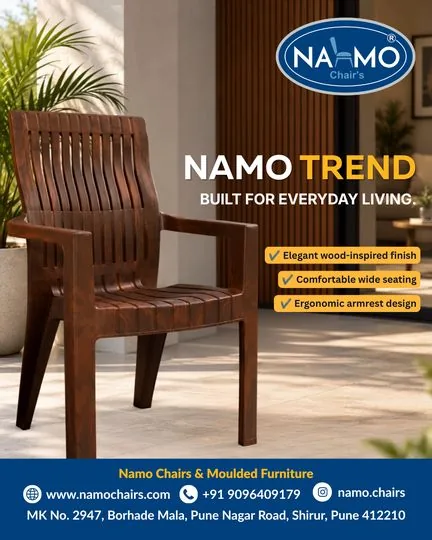
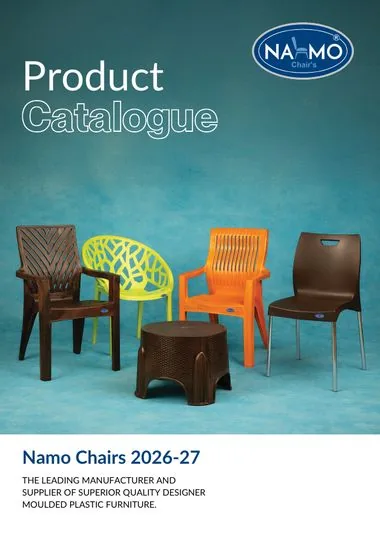
Namo Chairs makes moulded plastic furniture in Shirur, near Pune, and sells through a network of 350+ dealers. When we started working with them, they had no social media at all. That made them a clean test case: no old content, no existing audience, no bias.
So instead of guessing which Reel format would work, we tested two.
Phase 1: Motion Reels (months 1 to 3)
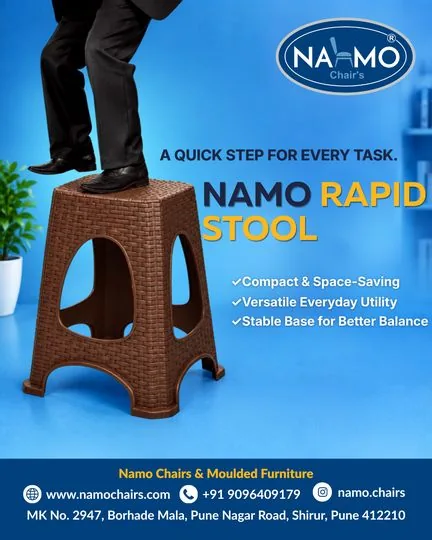
We started with motion-led Reels: animated product shots, text overlays, smooth transitions and music. They’re fast to produce from product photography and they make a feed look polished quickly.
They did their job. They built a consistent feed and showed the range. But the account ticked along quietly. Views and reach stayed flat.

Phase 2: Face Reels (the last 2 months)
Next we switched to Reels with a real person on camera walking through each product: how it’s built, where it fits, why it lasts. Same products, same brand. The only real change was a human face and voice.
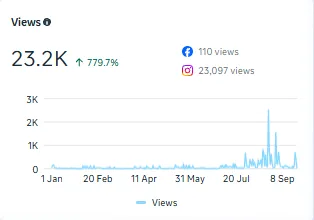
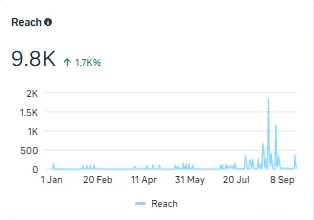
From late July, when the face Reels began, every chart turned upward.
| Instagram metric (1 Jan to 24 Sep 2026) | Result | Change |
|---|---|---|
| Views | 23.2K | +779.7% |
| Accounts reached | 9.8K | +1,700% |
| Content interactions | 945 | +465.9% |
| Profile visits | 801 | +342.5% |
Source: Meta Business Suite insights, Instagram.
Why faces win
- People trust people. A person explaining a chair feels like advice. An animation feels like an ad.
- Faces hold attention. Viewers stop scrolling for a face faster than for a product.
- Explaining builds authority. “Here’s why this stool won’t wobble” answers a buyer’s real question.
- It feels made for Instagram. Face Reels look native to the platform, so the audience treats them like content, not commercials.
So should you stop making motion Reels?
No. Motion Reels are still useful for launches, catalogues, offers and keeping the feed looking consistent. The lesson is about the mix. For Namo, face Reels now drive growth while motion content supports it.
How to start face Reels (even if nobody wants to be on camera)
- Pick one person who knows the product: an owner, a salesperson, a supervisor. Polish matters less than knowledge.
- Answer one question per Reel. “Which chair for a restaurant?” “How much weight can this take?”
- Keep it under 30 to 40 seconds and lead with the answer.
- Shoot at the factory, shop or site. Real places look more believable than studios.
- Batch-shoot. One half-day can produce a month of Reels.
The biggest mistake brands make is deciding a format works without testing it. Test for a few weeks, read the insights, then commit.
FAQ
Are face Reels better than animated Reels?
For Namo Chairs, yes. After switching to Reels with a real person explaining products, Instagram views grew 779.7% and reach grew 1,700% over the year.
Do I need a professional presenter for face Reels?
No. Someone who knows the product well is more convincing than a polished presenter.
More from the blog.
 B2B marketing
How Manufacturers That Sell Through Dealers Can Build a Brand Online
Factory, range and dealer network in place, but nothing a customer can see online. Here is how to build the foundation in the right order.
Read article → Social media
Instagram Reels Ideas for Restaurants and Food Brands
Food is the easiest thing to film and the hardest to make stand out. Fifteen ideas that work, including the heritage Reel that hit 237K views organically.
Read article → Social media
Unlocking Social Media Marketing Strategies for Business Growth
Content, community, advertising and platform-specific tactics: the building blocks of a social media strategy that actually grows a business.
Read article →Your vision.
Our mission.
Tell us about your business. We’ll audit where you stand and send a plan with scope and monthly deliverables.