Solar Companies: How to Explain “Saving on Your Bill” So Homeowners Actually Enquire
Homeowners don't buy kilowatts. They buy a smaller electricity bill. How to put that one number at the centre of your website, with lessons from KTM Energy Experts.
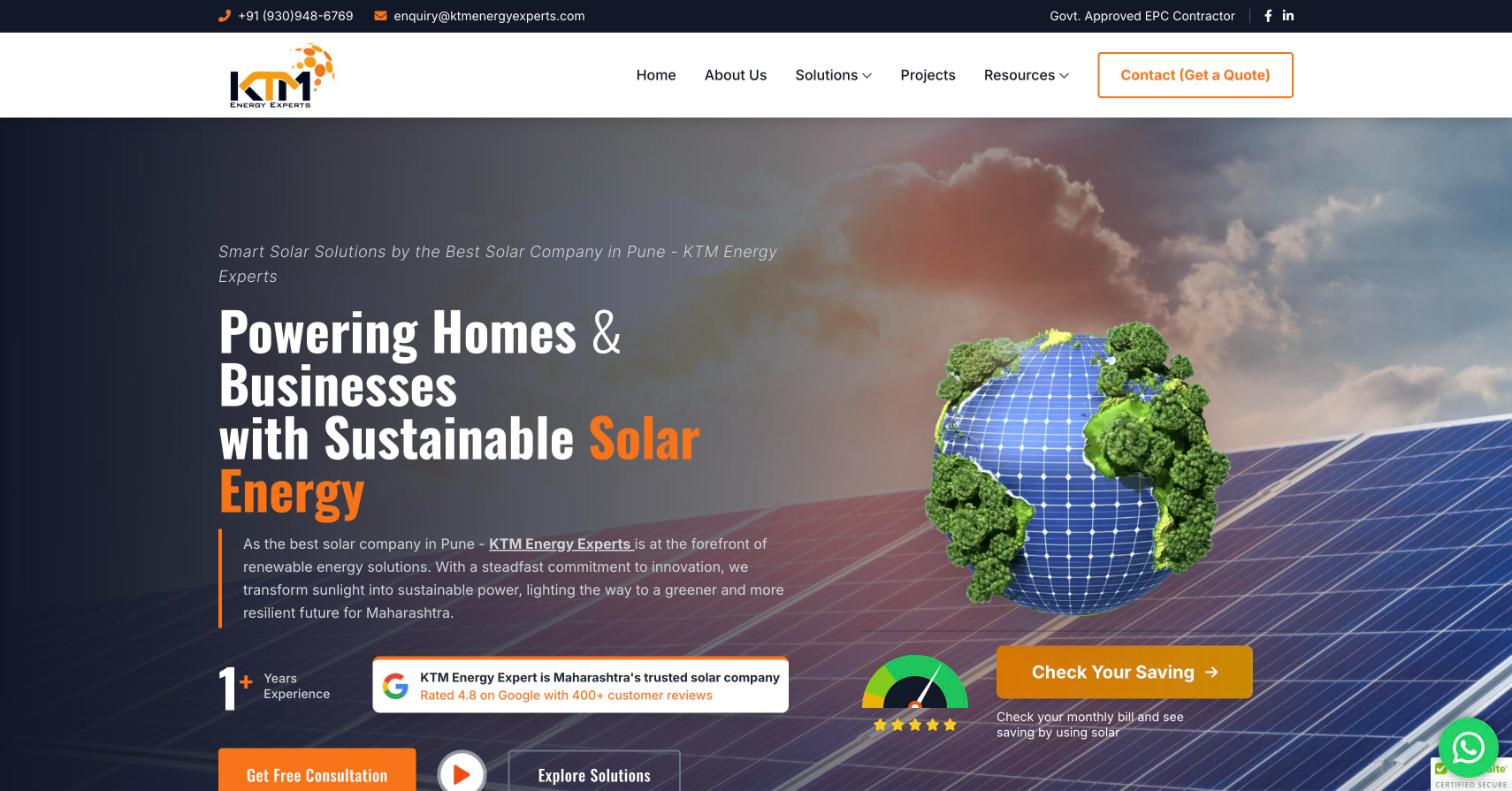
Most solar company websites talk like engineers: kilowatts, panel efficiency, inverter brands. Homeowners think in a different unit: their monthly electricity bill.
The solar companies that get the most enquiries translate everything into that one number. Here is how to do it, and what we learned building the website for KTM Energy Experts, a solar company in Pune.
Start with the bill, not the system
A homeowner’s first question is “How much will I save?”, not “How many kW do I need?”. So the first screen of your website should answer that.
Explain savings in three simple numbers
Whatever tool or table you use, keep it to three numbers people can remember:
- Your bill today, for example ₹3,500 a month.
- Your bill with solar, often just the fixed charges.
- Payback time, the number of years until the savings cover the cost.
Add a line for the government subsidy. Under the PM Surya Ghar scheme, eligible homes can get a central subsidy on rooftop solar, which shortens the payback a lot. Always tell visitors to check the current amounts, as they can change.
Show proof, not promises
- Real installations. Photos of rooftops in Pune societies and bungalows, with the system size.
- Before-and-after bills. With the customer’s permission, a blurred bill from before and after solar is the most convincing thing you can post.
- Reviews. KTM shows its Google rating right on the home page, because people trust other homeowners more than a company’s claims.
- Approvals. Being a government-approved EPC contractor matters for subsidy, so say it clearly.
Answer the worries before they ask
Most people who do not enquire have a worry they never say out loud. Answer these on the site:
- Will it work during the monsoon?
- What happens to extra power? (Net metering.)
- Who handles the paperwork for subsidy and net metering?
- What if something breaks? (Warranty and service.)
- Will it damage my roof or leak?
Make enquiring easy
- A “Get a free consultation” button on every page
- WhatsApp for quick questions, because many people prefer to message first
- A short form: name, area, monthly bill and roof type. Not 12 fields.
Google Business Profile matters a lot in solar, because people search “solar company near me”. Short Reels of installation days and simple subsidy explainers also do well on Instagram and YouTube.
We build websites and run marketing for solar and energy companies. See our website development service and Google Business Profile service, or talk to us.
FAQ
What should be on a solar company’s home page?
A clear headline, a savings calculator or “check your saving” button, proof such as installations and reviews, and an easy way to book a consultation.
Should solar companies show prices online?
Showing a starting price or price per kW helps. A full quote depends on the roof and usage, so a quick consultation form still matters.
How do solar companies get more leads?
A clear website, a strong Google Business Profile with reviews, local ads, and content that explains savings and subsidy simply.
Is the solar subsidy still available?
Central subsidy for residential rooftop solar is available under the PM Surya Ghar scheme. Amounts and rules can change, so check the latest details before you apply.
More from the blog.
 Strategy
Website or Instagram First: What Should a New Business Build First?
It’s the most common question we get from new businesses. The honest answer depends on how your customers find you and how they decide.
Read article → Local SEO
Google Business Profile Guide: Turning Searches into Calls and Directions
For a local business, Google Maps is the second shopfront. Here is how to set it up properly, with a real example of 11,658 interactions in six months.
Read article →Local SEOA Local SEO Checklist for Small Businesses in India
When someone searches “near me”, you have seconds to be found. This is the checklist we use for clients, from Google Business Profile to website basics.
Read article →Your vision.
Our mission.
Tell us about your business. We’ll audit where you stand and send a plan with scope and monthly deliverables.